
Tolerating BS: Patrick Ruffini, Republican Pollster and Co-Founder Of Echelon Insights, On His Career In The GOP Digital World
Patrick's unconventional career trajectory, advice on dealing with tough situations, what it takes to start a firm, and lessons learned along the way.

“Being able to tolerate a lot of bullshit, at least early on, is important. It’s an immutable truth of politics,” said Patrick when asked what advice he has for young people looking to break into politics.
Patrick Ruffini, co-founder of Echelon Insights (and, full disclaimer, my boss), sat down with me last week to discuss his career in politics. As the former webmaster for the Bush-Cheney ‘04 reelection campaign (webmaster being the early-aughts term for someone who managed an organization’s website), Patrick was at the forefront of Republican digital operations, far before Facebook and Twitter even existed.
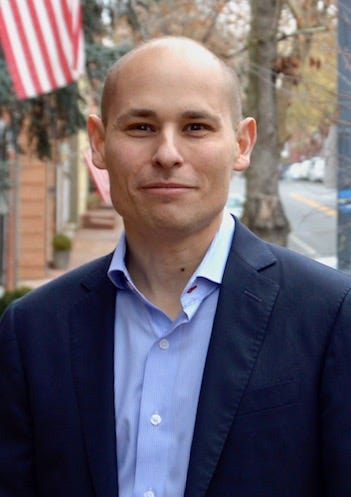
“My first job in politics was on a mayoral race in Philadelphia when I was in college. But my first job in DC wasn’t actually in politics. I tried to get a job in politics after that campaign by blasting my resume out to every political consulting firm I could find. So I worked for a think tank for a year and a half,” Patrick told me in response to my question about his first foray into politics. His story isn’t unique by any means — finding a job in politics in an off year (basically any year that doesn’t have a major set of elections, so most years ending in an odd number) is challenging.
So, what eventually changed Patrick’s fortunes? “Because I applied to so many political firms and interviewed at a lot of them too, I made a lot of contacts that allowed me to know when someone was hiring. Eventually, there were two people I met at the Republican National Committee doing digital who were hiring.” That’s an important lesson to remember — never burn bridges, even if you’re frustrated that you didn’t get the job or internship you wanted, because you never know what might happen down the line. Handle rejection with grace and respect, and always thank your interviewer for their time.
Never burn bridges!
“That can pay off in the long run — interviewing at a bunch of places and then checking in at the right time, say 16 months later closer to an election, because they or someone else they know might have an opening.”
Patrick’s resume was bolstered by his side projects. “By the time they had reached out, I had already been doing things right. I was creating my own websites and building grassroots support for Republicans.” This leads into another great bit of advice that Patrick gave: “Demonstrate that you can do the job before you actually have the job.” While Patrick showcased this by creating a grassroots website, in today’s age this could look like having a blog on a particular policy area (like this one!), a Twitter where you post things like data visualizations and maps (#ElectionTwittter), or a YouTube channel commenting on political issues. And when it comes to campaigns, Patrick’s advice is to “be willing to volunteer and be willing to do things at the bottom level, or even at the unpaid level, and working your way up through the process.”
“Demonstrate that you can do the job before you actually have the job.”
Eventually, Patrick went from the Republican National Committee (known in DC as the RNC) to the re-election campaign of President George W. Bush in 2004, serving as the webmaster. Then, after brief stint in the Bush Administration, Patrick ran the RNC’s digital operation from 2005 to 2007. In 2007, Patrick founded the digital firm Engage in Alexandria, VA at the age of 28. That struck me as pretty young to start your own firm. Patrick responded that it wasn’t so much about age as it was about having a track record. “A majority of firm founders were either senior staffers at a party committee, had a big win on a campaign, or both.”
After leading Engage for 7 years, Patrick and Kristen Soltis Anderson (who I will also be interviewing soon!) founded Echelon Insights, a public opinion research firm that blends polling, data science, and digital analytics to provide valuable insights to political, non-profit, and corporate clients alike. For Patrick, starting Echelon wasn’t a natural next-step in his career. “I’ve had the good fortune of working in different niches in politics. And right now, the space that Echelon is in is the public opinion research and data space. We’re trying to innovate to be larger than a traditional polling company by encompassing things like social media listening and political data analytics.”
If Patrick were to describe the ideal personality type for someone who wants to work in political data, it wouldn’t be what you typically expect in a politico. “Being able to be curious, analytical, and patient in pouring over very large datasets to highlight the right points for a client. You can’t have a one-track mind as an analyst — your analytical skill set has to intersect with good communication skills. Even if you’re not going on TV, you have to always consider what your data means to real voters.”
“You can’t have a one-track mind as an analyst — your analytical skill set has to intersect with good communication skills.”
To close out our chat, I asked Patrick to give me an example of a setback he faced in his career, and how he overcame it — a question I ask when I am interviewing candidates for my company. “In the runup to the 2008 Presidential Election, I was working for a primary campaign, who will remain nameless, as an advisor. This campaign turned out to be completely unprepared, and wasn’t at all where I thought they needed to be, so we parted ways.”
This happens a lot more than you’d think — many campaigns, especially at the beginning, are ramshackle operations, and everyone tends to work extremely long hours keeping them running through the primaries. “After reflecting and thinking through it rationally, I realized I had somewhat inflated expectations because I was emotionally invested. The lesson I learned was that, although I don’t regret the decision to leave, I needed to figure out how to operate in environments that are less than ideal. I was very lucky early in my career that I landed on well-formed campaigns, but that’s not the norm.”
This anecdote led to my final question — what advice did Patrick wish he had received early on in his career? His answer is something that I really want to emphasize to y'all: “You’re not going to have it handed to you on a silver platter. You have to be able to make it work in an environment that’s less than ideal. Being able to tolerate a lot of bullshit, at least early on, is important. It’s an immutable truth of politics.” That may sound discouraging, but it shouldn’t be. The beauty of politics is that there is no one single path to success. Patrick went from a mayoral campaign, to a think tank, to a presidential campaign, to the administration, to a party committee, and then founded two firms that do quite different things. That’s a pretty atypical path, but it worked for him because he stuck to it and didn’t get discouraged by tough conditions.
The beauty of politics is that there is no one single path to success.
If you don’t get your dream internship, or your top-choice college rejects you, just remember that, unlike a structured career path such as law or medicine, there are an almost uncountable number of paths to success in politics, and failure and rejection can actually turn into opportunities down the road. So, keep your head up — there’s a long, exciting road ahead and you’re just getting started!
You can follow Patrick Ruffini on Twitter, and subscribe to his newsletter about polling, data, and tech, The Intersection.
Thank you for reading the second edition of Swamp Survival Guide. I would very much appreciate it if you shared this piece with anyone you know who is interested in politics:
And, if you haven’t subscribed yet, please do!
The next edition will be focused on how to write a resume and cover letter for a political job and/or internship. If you have any questions, are interested in sitting down for an interview, or just want to chat, drop me a line at benjaminkhoshbin@gmail.com.